Shot blasting plays a vital role in surface preparation and finishing across multiple industries, from construction and automotive to aerospace and heavy metallurgy. Although terms such as grit blasting, abrasive blasting, media blasting, and shot peening are sometimes used interchangeably, they all revolve around the same fundamental principle—propelling abrasive material against a surface to clean, strengthen, or prepare it for subsequent coating.
What Is a Shot Blasting Machine?
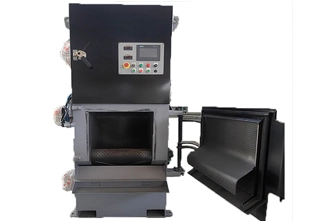
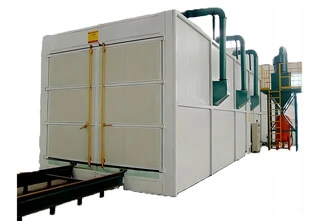
For those asking what is shot blasting machine, it is a fully enclosed piece of equipment that uses a centrifugal wheel to propel small abrasive media—such as steel shots, grits, or cut wire—at high velocity onto metal, stone, or concrete surfaces. This process effectively removes rust, scale, and other unwanted deposits, leaving behind a clean and uniform finish that enhances coating adhesion and improves surface properties.
Shot blasting serves three key functions:
Cleaning and descaling metal castings and forgings.
Enhancing paint and coating adhesion.
Modifying surface characteristics by removing contaminants and improving durability.
Roster manufactures shot blasting machines in various capacities and configurations to suit different industrial needs. These machines typically include a rotating blast wheel capable of processing between 60 kg and 1200 kg of abrasive media per minute. Each unit is equipped with a dust collection system to prevent air contamination and improve environmental safety, ensuring operations remain clean and efficient.
The Shot Blasting Process
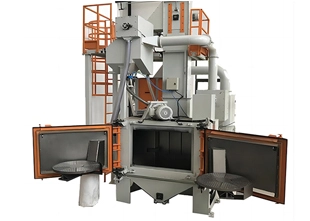
In a typical shot blasting operation, components are loaded into the machine’s chamber, often onto a rubber conveyor or table system designed to rotate or tumble parts for full exposure. Understanding the shot blast machine working process begins with the blast wheel, which accelerates the abrasive through centrifugal force, striking the surface and effectively removing impurities such as oxide layers, paint, or rust. After cleaning, the machine’s recycling system collects the used abrasive, separates reusable particles, and filters out dust and debris for reprocessing.
The main components of a shot blasting system include:
A reinforced work cabinet lined with abrasion-resistant materials.
A perforated rubber conveyor for continuous tumbling and even surface blasting.
A high-speed blast wheel unit with alloy rotor and blades for efficient energy transfer.
An abrasive recirculation system that separates usable media from dust.
A dust collector that filters exhaust air and maintains environmental standards.
Each element contributes to the system’s durability, performance, and operational safety, ensuring long service life with minimal environmental impact.
Evaluating Shot Blasting Efficiency
To maintain optimal performance, the working of shot blasting machine systems must be regularly assessed. Evaluation focuses on cleaning quality, energy load, and abrasive condition. Surface cleanliness depends on both the quantity of abrasive used and the duration of the blasting cycle. Over time, worn or contaminated media can reduce cleaning efficiency and damage internal components.
Other key factors include maintaining proper motor load, ensuring clean separator screens, and monitoring vibration or noise levels—indicators that mechanical alignment or components may need servicing. To maximize machine longevity, the abrasive mixture should contain less than 1% non-metallic contaminants and have a balanced grain size distribution.
Applications of Shot Blasting in Industry
Shot blasting is widely applied in industries such as shipbuilding, aerospace, automotive, rail, and general metal fabrication. A shot blasting machine used for these applications can clean castings, forgings, and welded structures, as well as prepare surfaces before painting, coating, or galvanizing. Wire rod shot blasting machine is widely used for continuous surface treatment of wire rod, rebar, and other long products. Beyond metal treatment, shot blasting is also employed in construction for cleaning concrete floors, roads, and building exteriors, as well as for maintaining pipelines and underwater tanks to prevent corrosion.
When operating airless shot blasting machines—where electric energy is converted directly into abrasive kinetic energy through the centrifugal wheel—the process can achieve throughput rates ranging from 60 to 1200 kg per minute. This high efficiency makes shot blasting ideal for large-scale, heavy-duty projects requiring substantial surface cleaning or strengthening.
Advantages of Using a Shot Blasting Machine
Shot blasting offers several notable advantages over traditional cleaning methods. It is cost-effective, environmentally friendly, and capable of producing consistent results across different materials and surface conditions. The reusable nature of abrasive media significantly reduces operational costs while minimizing waste generation.
The process not only cleans and smooths metal surfaces without damage but also enhances adhesion for coatings and finishes. Moreover, it offers flexibility in abrasive selection—ranging from steel grit to glass beads—allowing operators to tailor the process according to surface type, hardness, and desired texture.
Compared to sandblasting, shot blasting generates less dust, operates more efficiently, and maintains a cleaner, enclosed environment—making it both safer and more sustainable for industrial use.
 English