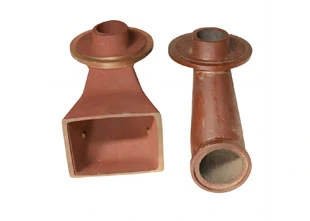
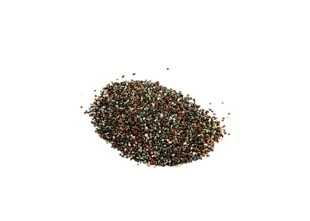
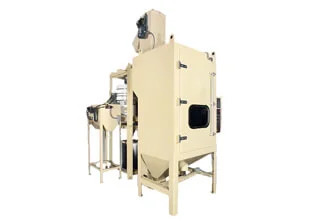
Industrial shot blasting systems, regardless of their specific configuration, incorporate several fundamental elements. A shot blasting machine diagram typically illustrates how these core components are arranged and work together during the blasting process. The blast generator—consisting of turbine wheels or air nozzles—accelerates and directs the abrasive media toward the target. The blast chamber or cabinet provides an enclosed environment where the workpiece interacts with the abrasive stream, containing the process safely. A media circulation system, featuring hoppers, screw conveyors, bucket elevators, and separators, recovers spent abrasive, removes contaminants and dust, and recirculates clean media for reuse. Work handling mechanisms, such as rollers, rubber belts, hangers, turntables, trolleys, or mesh belts, transport parts efficiently through the blasting area. Dust collection and filtration units, equipped with fans and filters, capture fine particulates to maintain visibility, ensure operator safety, comply with environmental standards, and prevent re-contamination. Finally, a control system—including panels, PLCs, and sensors—manages variables like wheel speed, abrasive flow rate, conveyor movement, and safety interlocks.
Grasping these components is crucial, as selecting the appropriate equipment involves aligning the media delivery method, blast pattern, and part handling approach with the workpiece's geometry and material properties.
The main machine families (and what they're good at)
Shot blasting machines come in various configurations, each optimized for specific workpiece types and production needs.
Tumble or crawler (drum) machines involve parts being continuously tumbled within a rubber or steel belt drum while exposed to blast wheels. They excel with small, durable items like castings, forgings, fasteners, gears, and springs that tolerate part-on-part contact, delivering high batch throughput, all-around uniform coverage due to tumbling motion, and a compact design. However, they are unsuitable for large, flat, delicate, or sharp-edged components that risk damaging the belt or one another.
Hanger or hook machines suspend workpieces on rotating hooks that convey them into the blast chamber. These are ideal for medium to large castings, weldments, and heat-treated parts requiring separation to avoid collisions or full access to intricate shapes, offering gentle individual handling, adaptable fixturing, and versatility for irregular geometries. Drawbacks include lower loading density compared to tumblers, greater need for custom fixtures, and restrictions based on hook capacity.
Continuous hook-pass and monorail systems hang parts from an overhead conveyor or monorail that moves them through successive blast zones, often incorporating pre- or post-treatment stages. They suit high-volume manufacturing of structural elements, fabrications, and large assemblies, including multi-meter construction pieces, enabling seamless continuous operation and integration with painting, drying, or machining processes for just-in-time production. Challenges involve higher initial investment, complex line balancing and facility layout, and reduced flexibility for small runs.
Roller conveyor (structural) machines transport steel plates, beams, profiles, and similar stock on rollers past one or more blast wheels. They perform exceptionally well for structural steel, plates, bars, and profiles ahead of fabrication or coating, with straightforward inline integration into cutting and welding lines. They are less appropriate for small loose parts or intricate delicate forms.
Wire, bar, and pipe machines guide round bars, wire coils, or pipes through specialized wheel arrangements and V-rollers or supports for complete 360-degree exposure. Wire rod shot blasting machine is particularly effective in this category, tailored for wire rod, rebar, pipes, and other elongated cylindrical products, providing consistent circumferential cleaning and peening within defined diameter ranges, though they lack versatility beyond those shapes.
Table (turntable) machines position workpieces on a rotating steel table within the blast chamber. They work well for small to medium parts too heavy or collision-sensitive for tumbling or hanging, such as certain castings and automotive components, with simple fixturing and suitability for mixed shapes in modest batches. Constraints include limits on part height and diameter, plus potential shadowing on complex geometries unless additional rotation or elevation is used.
Trolley or bogie (walk-in) chambers place large items on rail-mounted trolleys that enter a blast room, with possible rotation or reciprocation. These handle very heavy and bulky castings, fabrications, frames, housings, and heavy equipment parts, accommodating extreme sizes and weights with flexible manual or semi-automatic operation. Trade-offs include lower throughput, greater space requirements, and more extensive material handling needs.
Wire-mesh belt machines convey parts on a continuous wire-mesh belt through the blast chamber, with wheels targeting top and often sides or bottom. They are gentle and effective for thin-walled, fragile, or small items like aluminum and iron castings, non-ferrous parts, and ceramics that cannot withstand tumbling, supporting continuous flow with good visibility and access. Limitations arise from belt loading constraints, orientation sensitivity, and unsuitability for very large or tall pieces.
Floor or concrete shot blasters are self-propelled or push units that treat horizontal concrete and steel surfaces while recycling media in a closed loop. They prepare floors and decks to achieve CSP-3 to CSP-7 profiles for subsequent coatings, overlays, or grooving, offering high productivity, contained operation, and low dust when properly managed. They are restricted to flat horizontal areas, with edges and details requiring alternative approaches.
Matching machine type to workpiece geometry
Workpiece geometry serves as the primary criterion for equipment selection. Key considerations include size and mass—small items suit tumblers or mesh belts, while very large or heavy ones demand hanger, trolley, or oversized table systems. Shape complexity, such as deep recesses, internal channels, or blind features, benefits from multi-wheel setups or directed air-blast nozzles for thorough coverage. Collision sensitivity calls for avoiding bulk tumbling in favor of individual fixturing or belts when parts are prone to deformation or damage. Selective surface treatment favors localized air blasting or programmable wheel patterns.
Examples include using tumble or crawler machines for robust small castings and forgings needing batch descaling; hanger or hook-pass systems for medium castings, weldments, and irregular shapes requiring collision-free exposure; wire-mesh belts or rotary tables with spaced placement for thin-walled aluminum die castings or fragile components; roller conveyor machines for structural beams, channels, and plates in fabrication lines; dedicated wire, bar, or pipe blasters with circumferential wheels and V-rollers for round long products; hook-pass or trolley systems for massive excavator booms, frames, and heavy fabrications; and self-propelled units for concrete floors and decks targeting specific CSP profiles.
Matching machine to material and surface requirement
The workpiece material and desired finish dictate abrasive selection, impact intensity, and exposure parameters. Common abrasives include steel shot or grit for ferrous components, heavy descaling, and structural steel due to its durability and recyclability; glass beads for non-ferrous metals and delicate surfaces needing a smooth, satin appearance; aluminum oxide for aggressive removal on tough coatings or hard alloys; and plastic media for soft metals, composites, or thin sections where substrate preservation is essential. Compatibility between media, machine design, and workpiece is vital, as some systems are optimized for metallic abrasives within particular size ranges.
For surface outcomes, light cleaning with minimal profile (e.g., CSP-3/4 or cosmetic finishes) uses reduced wheel speeds, finer media, and shorter exposure. Medium to heavy profiles for industrial coatings or linings (CSP-5–7) require greater energy, coarser media, additional wheels, and adjusted throughput speeds. Shot peening demands precise coverage, intensity, and media specifications to build compressive stresses without excess deformation. Always define the target cleanliness (e.g., Sa or SSPC for steel, CSP for concrete) and validate that the machine-media combination achieves it reliably.
Matching machine to production volume and workflow
Throughput and workflow compatibility are essential even with ideal geometry and media matches. Low- to medium-volume, high-variety operations favor batch tumblers, table machines, and manual/semi-automatic hanger setups for adaptable scheduling. High-volume, low-variety production benefits from continuous hook-pass lines, roller conveyors, and wire-mesh belts that ensure steady flow and upstream/downstream integration. On-site or project-based work relies on portable floor blasters and mobile air systems rather than stationary installations.
Automation features enhance performance, including variable-frequency drives for wheel and conveyor speeds, automated abrasive metering for consistent profiles and reduced usage, recipe storage for part-specific settings, and robotic integration for intricate peening.
Operating costs often outweigh initial purchase price over time. Key factors encompass abrasive usage and reclamation efficiency (influenced by media quality, separation effectiveness, and containment), energy use (from wheel motors and dust collection), replacement of wear items like liners, blades, nozzles, belts, and seals, labor for setup, handling, maintenance, and oversight, and minimized downtime through reliable design and service access. Evaluate total cost per part or per square meter based on projected utilization rather than equipment price alone.
Practical selection checklist
Begin by clarifying the application: identify workpiece material and dimensional range, contaminants or scale to remove, required surface profile or cleanliness standard, and whether the goal is cleaning, profiling, or peening.
Next, select handling and machine type: opt for tumble/crawler if parts withstand bulk tumbling; choose hanger, table, or mesh belt for separation or orientation needs; select roller, wire/bar, or pipe machines for long prismatic or cylindrical forms; and use trolley or room systems for oversized items beyond standard cabinets.
Then, determine media and process parameters: select appropriate media type and size for material and finish; set energy levels via wheel power/speed/quantity or air pressure/nozzle dimensions; adjust exposure through speed or cycle time; and confirm results with test pieces and profile comparators.
Workpiece type | Recommended machine type | Typical media | Process notes |
Small iron castings, gears, springs | Tumble / crawler | Steel shot / grit | High batch throughput; robust parts only. |
Medium weldments, irregular castings | Hanger / hook | Steel shot / grit | Individual fixtures; avoids collisions. |
Structural beams, plate | Roller conveyor | Steel shot / grit | Inline with fabrication and coating. |
Thin�walled Al die castings | Wire�mesh belt or table | Steel shot or glass beads | Gentle handling; control profile tightly. |
Wire, bar, and pipe | Wire/bar or pipe blaster | Steel shot / grit | All�around cleaning with V�rollers. |
Large frames and heavy structures | Trolley or hook�pass | Steel shot / grit | Suited for multi�ton fabrications. |
Concrete floors and steel decks | Self�propelled floor blaster | Steel shot | Controlled CSP profile for coatings. |
Finally, address environment, safety, and compliance: verify dust collection and filtration adequacy; supply necessary PPE such as eye/ear protection, gloves, and respirators; and ensure adherence to noise, dust, and waste regulations.
Implementation best practices
With suitable equipment selected, consistent process control ensures sustained performance. Regularly maintain blast wheels and nozzles for alignment, minimal wear, and stable speed to deliver uniform results. Track abrasive condition and composition (fresh versus degraded) to maintain profile consistency. Conduct routine dust collector and filter servicing to safeguard equipment and personnel. Train operators thoroughly in setup, monitoring, and issue resolution, as outcomes vary significantly with technique. Document key parameters—wheel speed, media flow, line speed, and measured profiles—for traceability and ongoing optimization.
By approaching equipment selection as a systematic engineering process that balances geometry, material, finish needs, and production demands, you can establish a shot blasting operation that remains reliable, cost-effective, and supportive of downstream quality over the long term.
 English