In today’s precision-driven manufacturing environment, virtually every component—whether it is a stamped metal part, a die-cast housing, an injection-molded plastic piece, or a finely machined element—requires deburring before it can move forward. Burrs and flash are inevitable byproducts of production, yet they can compromise safety, performance, and the success of all subsequent operations. This in-depth guide explores the importance of deburring, the origins of burrs, and the most reliable, scalable methods to achieve smooth, safe, and high-quality surfaces every time.
What Exactly Is a Burr and Why Is Removal Essential?
A burr is an undesirable raised edge, sharp ridge, or small fragment of material that remains attached to a workpiece after processes such as cutting, stamping, drilling, milling, casting, or forming. In plastic components, the corresponding defect is known as flash—thin excess material that escapes along mold parting lines during injection molding.
Removing these imperfections is mandatory because even tiny burrs can lead to serious issues. Sharp edges pose a clear risk of injury to workers and end users, interfere with proper assembly and reliable assembly of mating parts, disrupt seals and moving mechanisms, and prevent coatings, paint, or plating from adhering correctly. Furthermore, customers immediately associate rough or sharp edges with poor quality. Consequently, effective deburring is a cornerstone of lean, high-quality manufacturing.
How and Where Do Burrs Actually Form?
Burrs develop wherever material is forcibly separated or plastically deformed. They most commonly appear along the edges of stamped, fine-blanked, or laser-cut sheet metal, on the parting lines of cast or molded parts, at the exit side of drilled or milled holes, and on the sheared ends of tubes, bars, and profiles. Although sharp, well-maintained tools and optimized process parameters can significantly reduce burr size, completely eliminating burr formation during primary forming or machining operations remains practically impossible in the vast majority of cases.
Proven Industrial Deburring Techniques
Mechanical Deburring for Heavy Burrs
When components carry particularly thick or stubborn burrs, initial removal is often performed through grinding, brushing, or dedicated machining operations. While effective at reducing large protrusions, these mechanical methods frequently generate smaller secondary burrs, demand considerable manual effort when performed by hand, produce inconsistent results, and carry a notable risk of injury. For these reasons, mechanical pre-deburring is almost always followed by a more refined finishing process.
Mass Finishing and Vibratory Finishing
Mass finishing, particularly vibratory and centrifugal systems, stands out as the most popular and versatile deburring technology in modern industry. Its strength lies in the ability to treat thousands of parts simultaneously while reaching internal features and intricate geometries that hand tools or brushes can never access. The process delivers highly repeatable edge rounding and surface refinement, integrates seamlessly with upstream presses or die-casting machines, and often combines deburring with degreasing and cleaning in a single step. Suitable for metals, plastics, ceramics, and even rubber, mass finishing allows precise control of aggressiveness—from heavy material removal to gentle polishing—simply by varying media type, compound chemistry, amplitude, and processing time.
Shot Blasting and Wheel Blasting Systems
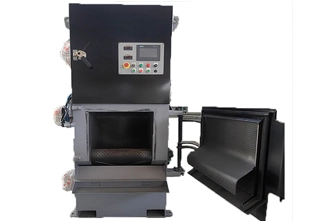
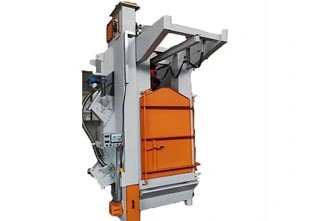
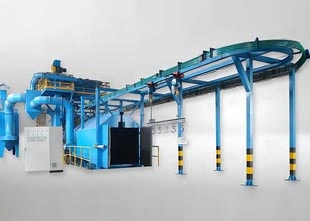
Shot blasting shines when components feature large, thick burrs (such as those on flame-cut plates or saw-cut structural sections), when materials are exceptionally hard, or when intense, targeted treatment is required. Contemporary turbine-wheel and nozzle-based machines provide excellent process control and high throughput while simultaneously enhancing overall surface integrity and fatigue resistance—valuable side benefits for load-bearing parts.
A particularly gentle alternative within the blasting family is high-pressure water jet deburring, which uses pure water or water mixed with fine abrasive media. This method is ideal for delicate or high-value components that cannot withstand traditional solid-media impact.
Thermal Deburring (TEM)
Thermal energy deburring employs a controlled gas explosion inside a sealed chamber to instantaneously burn away burrs. This rapid, residue-free technique excels at removing burrs from deep internal channels, blind holes, hydraulic valve bodies, and fuel-system components. It is, however, restricted to materials capable of briefly withstanding extreme temperatures.
Deflashing Plastic and Rubber Components
Injection-molded thermoplastics, thermosets, and rubber parts routinely develop flash along mold seams that must be eliminated without damaging the often-soft or thin-walled workpieces. Mass finishing with gentle plastic or organic media (such as walnut shell or corn cob) effectively removes flash from items like eyeglass frames, O-rings, seals, and overmolded electronic assemblies while generating minimal heat and preventing distortion.
Many facilities also employ dedicated blasting cabinets designed specifically for plastics. These systems use softer media such as polycarbonate or nylon beads and incorporate antistatic spray units to neutralize the static charge that would otherwise cause dust and removed particles to cling to the surface. The result is clean, flash-free plastic parts ready for immediate painting, bonding, or final assembly.
Selecting the Optimal Deburring Approach
Choosing the right method depends on part size, material, burr severity, geometric complexity, and production volume. High-volume small metal parts are typically best served by vibratory or centrifugal mass finishing. Large structural steel sections and flame-cut components benefit most from wheel or air blasting. Complex die-cast housings usually go through mass finishing, sometimes supplemented by targeted nozzle blasting. Precision parts with inaccessible internal burrs are prime candidates for thermal deburring or high-pressure water jetting followed by light mass finishing. Thermoplastics and thermosets respond well to cryogenic deflastic-media blasting or gentle vibratory processes, while plants needing maximum batch flexibility often rely on rotary or tub vibrators.
Make Deburring a Strategic Advantage
Far from being a mere cleanup step, deburring is a value-adding process that directly influences safety, quality, and total cost of ownership. By carefully selecting the most suitable technology—or an intelligent combination of technologies—and integrating it as close as possible to the primary forming operation, manufacturers gain higher throughput, dramatically lower labor costs, consistent part quality, reduced workplace injuries, and superior preparation for all downstream operations.
Whether you operate a high-speed stamping line or produce delicate plastic assemblies, today’s advanced mass finishing and shot blasting solutions (many of which are available from Roster) provide scalable, repeatable, and frequently fully automated performance that keeps every component perfectly smooth and your entire production process lean and competitive.
 English