A pipe shot blasting machine should be specified according to the pipe size range, initial surface condition, required cleanliness and surface profile, production rate, abrasive type, and downstream coating process.
For most industrial buyers, selecting a machine only by maximum pipe diameter or motor power is insufficient. Two machines that accept the same pipe diameter can deliver very different cleaning performance if their blast wheel arrangement, abrasive flow, pipe rotation, conveying speed, and recovery system are different.
For external surface preparation, the most important requirement is consistent 360-degree cleaning at the required production rate.
What Information Should You Provide When Specifying a Pipe Shot Blasting Machine?
The machine supplier should receive actual production information rather than only a request such as “a machine for 500 mm steel pipe.”
A useful specification should include:
| Parameter | Information to Provide |
|---|
| Pipe outside diameter | Minimum and maximum OD |
| Pipe length | Minimum, maximum, and typical length |
| Pipe weight | Maximum weight per pipe or per meter |
| Pipe type | Seamless, welded, spiral welded, structural pipe, etc. |
| Existing surface | Mill scale, light rust, heavy rust, old coating, etc. |
| Required cleanliness | Such as Sa 2.5 or project-specific requirement |
| Required profile | According to the coating specification |
| Production target | Pipes/hour, tons/hour, or required line speed |
| Abrasive | Steel shot, steel grit, or mixed abrasive |
| Downstream process | Painting, FBE, 3PE, powder coating, preservation, etc. |
The coating requirement should be confirmed early. A pipe prepared for a demanding protective coating may require a different abrasive mixture and operating window from a pipe that only needs rust and scale removal before fabrication.
For buyers evaluating a pipe shot blasting machine, these process requirements are more useful than simply asking for a larger blast wheel motor.
How Does a Steel Pipe Shot Blasting Machine Achieve Uniform 360° Cleaning?
A steel pipe shot blasting machine normally moves the pipe through the blasting chamber while rotating it. This combined forward and rotational movement exposes the complete circumference to the abrasive stream.
Uniform cleaning depends on three factors working together:
If the pipe moves too quickly, some areas may receive insufficient exposure. If rotation is unstable, the blast pattern can overlap excessively in some areas while leaving other areas under-cleaned.
V-shaped rollers or specially arranged support rollers are commonly used to support and rotate cylindrical workpieces. The roller arrangement should therefore be selected according to pipe diameter, weight, length, and surface condition.
When shot blasting pipe surfaces across a wide diameter range, adjustable roller spacing and stable pipe guidance become especially important.
What Surface Cleanliness and Roughness Should Be Specified?
Do not specify cleanliness and roughness as though they were the same requirement.
Surface cleanliness describes how completely rust, mill scale, coatings, and other visible contamination have been removed.
Surface profile describes the texture created by blasting and is particularly important for coating adhesion.
For many industrial coating applications, Sa 2.5 or an equivalent near-white blast cleaning requirement is commonly specified. However, the required condition should ultimately follow the coating system or project specification.
Surface profile should also be defined separately. A more aggressive abrasive can improve scale removal and create a deeper anchor profile, but an unnecessarily deep profile can increase abrasive consumption and may not suit the coating thickness.
The machine supplier should therefore know:
Required cleanliness grade
Required surface profile
Coating type and target dry film thickness
Initial rust and scale condition
This allows the blasting parameters to be designed around the final coating requirement rather than around cleaning speed alone.
What Abrasive Is Best for a Shot Blasting Machine for Steel Pipe?
Steel shot, steel grit, or a controlled mixture of both is commonly considered for carbon steel pipe preparation.
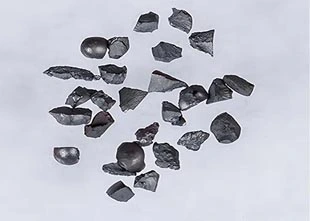
Round steel shot provides good impact and coverage, while angular steel grit offers stronger cutting action. A mixture can be useful when the process requires both efficient descaling and a defined surface profile.
The correct choice depends on:
Abrasive size also matters. Larger or more angular media generally creates a more aggressive blasting effect, while smaller media can improve coverage of the pipe surface.
A good shot blasting machine for steel pipe should allow the abrasive operating mix to be maintained consistently through an effective separator and recycling system. Excessive dust, broken abrasive, and contaminants in the operating mix will gradually reduce blasting consistency.
How Much Blast Wheel Capacity Does a Pipe Blasting Machine Need?
Blast wheel motor power alone does not determine production capacity.
Cleaning performance is influenced by:
abrasive flow × abrasive velocity × blast pattern × exposure time
For this reason, machine selection should consider both the number of blast wheels and their position around the pipe.
A small-diameter pipe operating at moderate production speed may require a relatively simple wheel arrangement. Larger pipes, heavy mill scale, or higher throughput can require additional blasting capacity to maintain full surface coverage.
Buyers should ask the supplier to confirm:
The key question is not “How powerful is the machine?” It is “Can the machine consistently achieve the specified surface condition at the required production rate?”
What Production Speed Should You Specify?
Production speed should be based on your required output rather than the maximum conveyor speed shown in a catalogue.
For example, the same pipe shot blasting machine may run faster on lightly rusted pipe than on heavily scaled pipe because the required abrasive exposure time is different.
When defining capacity, provide the supplier with typical production conditions:
Example RFQ information:
Pipe OD: 114–508 mm
Pipe length: 6–12 m
Maximum pipe weight: 2,500 kg
Initial condition: rust and mill scale
Required finish: Sa 2.5
Downstream process: protective coating
Target production: 20 tons per shift
This gives the manufacturer enough information to calculate wheel capacity, conveying speed, abrasive circulation, and dust collection requirements.
Catalogue speed should therefore be treated as a machine operating range rather than a guaranteed production result for every pipe condition.
What Should Be Checked Before Buying the Machine?
Before finalizing the order, confirm the complete system rather than only the blasting chamber.
A reliable external pipe blasting line should include properly sized:
Infeed and outfeed roller conveyors
Pipe rotation and guiding system
Blast wheels
Abrasive elevator and separator
Abrasive control system
Wear-resistant chamber protection
Dust collector
PLC and safety interlocks
The abrasive recovery capacity should be compatible with the total abrasive flow of the blast wheels. The dust extraction system should also maintain sufficient negative pressure around chamber openings to reduce dust leakage.
Where possible, ask for a blasting test using a pipe representative of your actual production. Inspect the complete circumference for cleanliness and profile consistency rather than checking only the most heavily blasted area.
For projects involving unusual diameters, heavy pipes, specific coating requirements, or higher production rates, Roster can configure the pipe shot blasting machine around the actual workpiece and production conditions. Buyers can also review Roster's broader shot blasting machine range or provide project parameters through the contact page for machine selection.
Conclusion
Specifying a pipe shot blasting system starts with the required surface result and production capacity.
Pipe diameter and length determine whether the workpiece can physically pass through the machine, while cleanliness, surface profile, initial condition, abrasive flow, rotation, and conveying speed determine whether it can be cleaned effectively.
For a new project, prepare the RFQ around five essential items: pipe dimensions, pipe weight, initial surface condition, required surface finish, and production capacity. With these parameters, the machine manufacturer can select the appropriate blast wheel configuration, material handling system, abrasive recovery capacity, and dust collector.
FAQs
What is a pipe shot blasting machine used for?
It removes rust, mill scale, old coatings, and surface contaminants from pipes before painting, coating, or further processing.
Can a pipe shot blasting machine clean the entire external surface?
Yes. The pipe normally rotates while moving through the blast chamber, allowing the abrasive stream to cover the full circumference.
What surface finish can a steel pipe shot blasting machine achieve?
Sa 2.5 is commonly required for industrial coating preparation, although the actual requirement should follow the applicable coating or project specification.
Is shot blasting the same as sandblasting?
No. Wheel shot blasting typically uses centrifugal blast wheels, while conventional sandblasting or abrasive blasting normally uses compressed air to accelerate the abrasive.
Which abrasive is suitable for steel pipe blasting?
Steel shot, steel grit, or a controlled mixture can be used depending on the required cleaning action and surface profile.
Can one machine process different pipe diameters?
Yes, provided the roller system, blasting chamber, blast pattern, and machine capacity are designed for the required diameter range.
 English